Catch the Drip: Why Smart Turkish Grilling Starts With a Stack of Flatbread
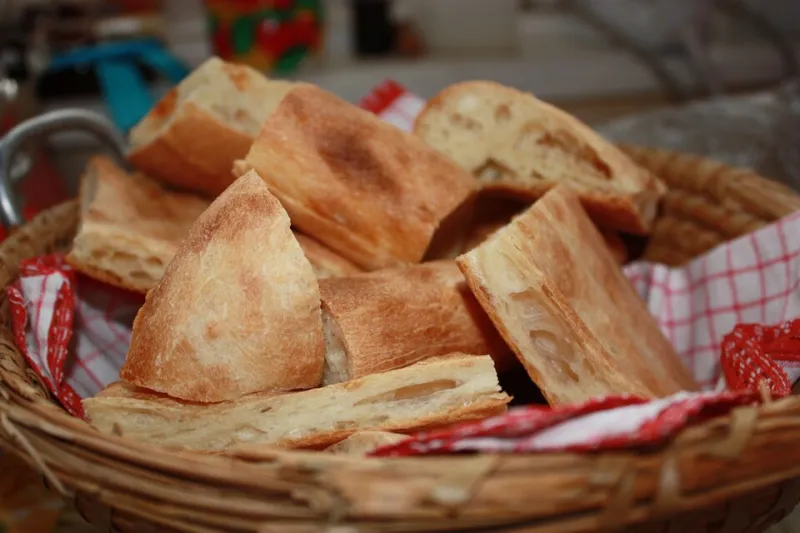
Photo: Gaeser, CC BY-SA 3.0, via Wikimedia Commons
At a Turkish grill, the meat tends to get the applause. The bread quietly does the work. It lines the platter so the juices have somewhere to land, it folds around a skewer when the forks run out, and it turns a few charred pieces into something that feels like a table full of food. In the UK we often treat flatbread as a delivery vehicle for dips. At a mangal, it is closer to a tool — and a very good one.
That is worth remembering before your next grill night. A smart bread strategy does not just add carbs. It makes the whole meal go further, catches flavour you would otherwise wipe away, and gives guests something to tear, share and argue over. The good news is that the breads you need are easier to find in Britain than ever, whether you are near a Turkish grocer, a decent bakery or just a larger supermarket.
Bread belongs at the fire, not just beside it
Think of flatbread as the quiet fourth utensil. You have tongs, a knife, maybe a board. Bread is the one you can eat. It soaks up the fat and tomato juices from a plate of Adana kebabs, holds a scoop of smoky aubergine, and makes a useful cushion when a piece of chicken comes off the skewer hotter than expected.
There is also a practical advantage for smaller UK households. A pack of flatbreads can stretch a modest amount of meat across two or three people without anyone feeling short-changed. Tear it, warm it, pile it up. The table looks generous even when the grill has only produced a couple of skewers and a handful of peppers.
A UK bread map for the mangal
The names can be confusing, especially because UK supermarkets use them loosely. Here is a working guide.
Pide is the soft, slightly puffy flatbread you will see in Turkish bakeries, often oval or boat-shaped. Plain pide is what you want for grilling and wrapping. The topped version — with minced meat, cheese or spinach — is a meal in itself, not a side. If you are buying from a Turkish grocer, ask for plain pide and check that it is not too sweet or doughy.
Lavash is thin, flexible and blistered. It is the one that folds neatly around a skewer and crisps up quickly over the coals. It is also the most forgiving if you are nervous about burning bread, because it can be warmed for seconds rather than minutes. Look for lavash in Turkish shops, Middle Eastern grocers and some larger supermarket bakeries. Good lavash should bend without cracking.
Bazlama is thicker and softer, a bit like a cross between a flatbread and a pillow. It is excellent for mopping and for tearing into rough pieces, but it needs a gentler hand over the fire. Treat it like a bread roll with a tanning habit: warm it at the edge of the grill rather than parking it over the hottest coals.
Pitta is not the same thing, but it is a perfectly decent stand-in when that is what the local shop has. The pocket is useful for stuffing, though it will not catch juices in the same way as a soft pide. Naan is too rich and too soft for most Turkish grill duties, but a plain one can work in a pinch if you are already buying it for something else. No need to be purist about every loaf.
How to warm flatbread without cremating it
The biggest mistake is treating bread like a steak. It does not need a fierce sear. It needs a warm surface, a little fat if you like, and your full attention.
If you are grilling over charcoal, wait until the flames have died down and the coals are glowing with a thin coat of ash. Hold a lavash about 10–15 centimetres above the coals for ten to twenty seconds a side. Move it constantly. You want soft, blistered patches, not black panes of glass. For pide or bazlama, place them on the cooler edge of the grill for a minute or so each side, then stack them in a clean tea towel. The trapped steam keeps them soft.
If the bread is a day old, splash your fingers with water and flick it over the surface before warming. Wrap it in foil and put it at the edge of the grill for a few minutes, then finish it directly over the coals for a few seconds. A dry flatbread will scorch before it softens; a slightly damp one has a fighting chance.
On a hob or in the oven, a dry frying pan over medium heat works well. Warm each bread for 20–30 seconds a side, then wrap it in a towel. Do not microwave it until it is hot and limp — that is how you get the texture of a dishcloth.
A bread strategy for a sharing table
Buy two or three types rather than one enormous pile. A soft pide for wrapping and scooping, a thin lavash for catching juices, and a thicker bazlama for tearing gives the table variety without turning dinner into a bread tasting.
Aim for roughly one large flatbread per person, plus a couple spare. That sounds like a lot, but bread disappears quickly once people start using it as a utensil. If you are serving a mezze-style start, put out torn pieces early with olive oil, sumac onions or a spoonful of yoghurt. By the time the skewers arrive, the bread will already be doing its job.
Line the serving platter with a layer of lavash before you slide the kebabs onto it. The bread will catch the juices and soften at the edges. Put that bread on the table last, torn into pieces, and watch it go first. This is not a trick to fill people up. It is simply the way a Turkish grill is built to eat.
The leftover bread move
Any bread left at the end of the night should not go in the bin. Tear it into rough pieces, toss it with chopped tomato, cucumber, parsley, sumac and a little olive oil, and leave it for ten minutes. The bread will drink up the dressing and become a proper bread salad — the kind of thing that tastes better than it has any right to. Alternatively, freeze the pieces in a bag. They will revive in a dry pan or at the edge of the next fire.
A stack of good flatbread will not make a bad grill night good. But it will make a good one feel more generous, more Turkish and considerably more delicious. Buy a little more than you think you need. The coals will do the rest.