Where's the Meat? The Case for a Fully Vegetarian Mangal

Photo: charred aubergine peppers halloumi on charcoal grill vegetarian Turkish meze, via images.stockcake.com
Every few months someone asks, half joking, whether a vegetarian can really enjoy a Turkish grill. The question carries an assumption inside it: that the mangal is a meat machine with a few peppers thrown on as decoration. I think that assumption is not just wrong, it is backwards. The vegetables are the interesting part. The meat is the easy part.
The mangal was never only about meat
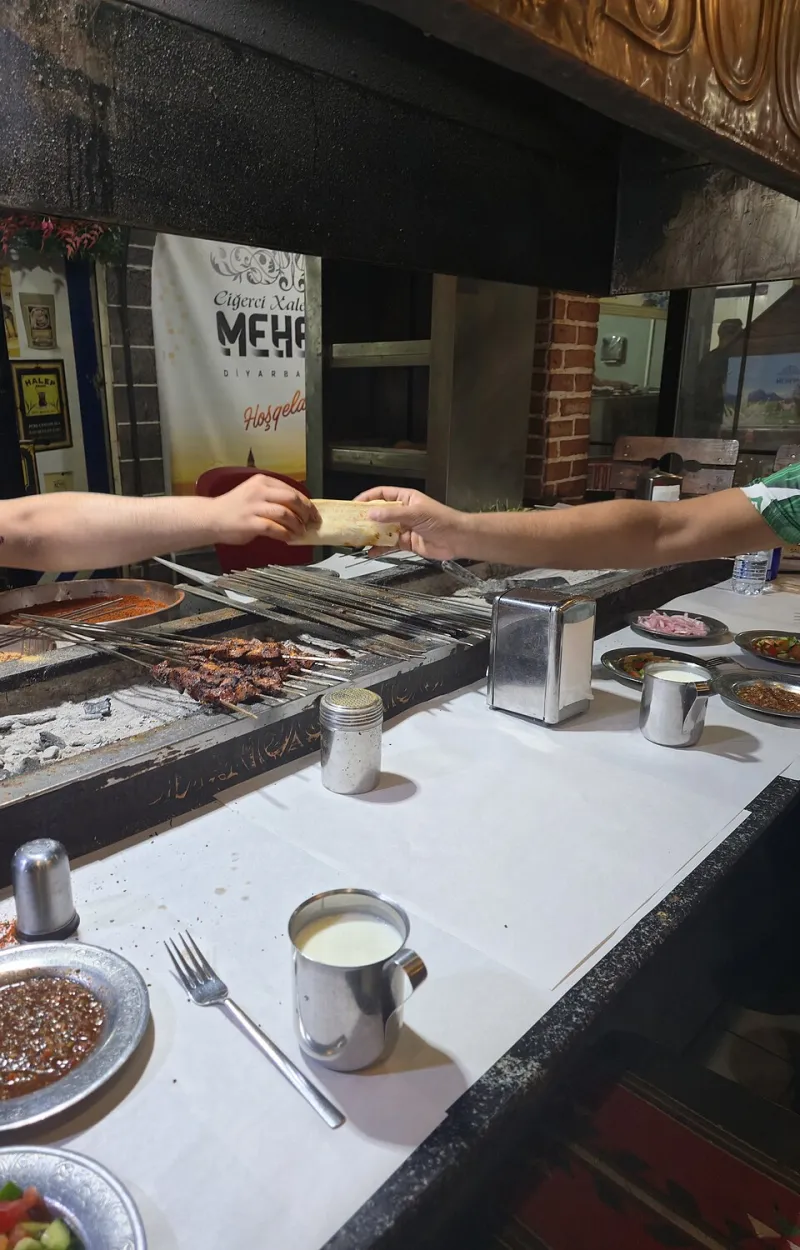
Walk into any ocakbaşı and look at what arrives before the skewers do. Bread. White cheese. A bowl of ezme. Charred long peppers slicked with olive oil. Aubergine salad with garlic and lemon. Hummus, haydari, a chopped salad with sumac. By the time the first kebab lands, you have already eaten a vegetarian meal and enjoyed it enormously.
Then consider the home kitchen. Közlenmiş biber — peppers roasted until the skins blister and blacken — is a staple preparation, not a side note. Patlıcan salatası exists because someone once decided a burnt aubergine was worth more than a plain one. İmam bayıldı, kızartma, stuffed peppers, stuffed vine leaves: this is a cuisine with an enormous vegetable repertoire, and much of it passes over fire on the way.
So the idea that a vegetarian mangal is a compromise gets things the wrong way round. It is closer to the original than a plate of chicken wings.
Why fire flatters vegetables more than it flatters meat
Meat over coals is a fairly narrow transformation: fat renders, the surface browns, smoke clings. Excellent, but predictable. Vegetables change character entirely. Aubergine goes from spongy and mild to collapsing, sweet and almost smoky-savoury. Onions turn jammy. Peppers lose their raw green edge and gain sweetness. Flatbread puffs and chars in about ninety seconds.
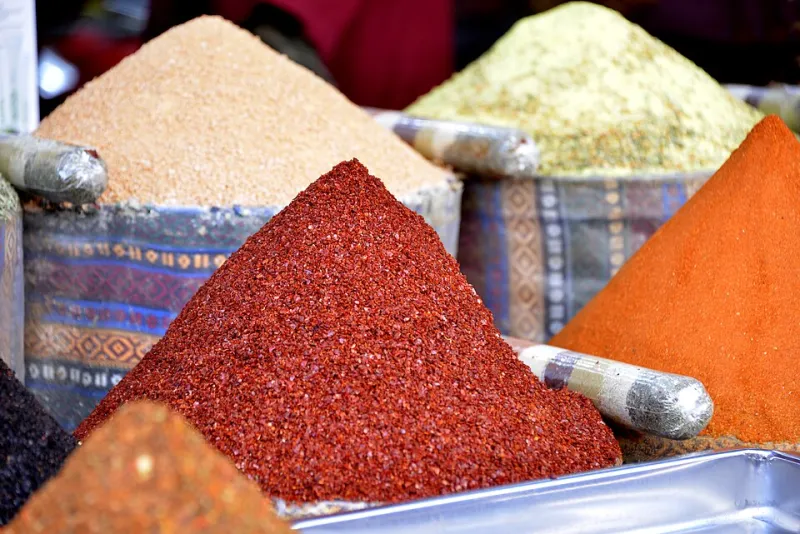
The reason is water and sugar. Vegetables are mostly water, so direct heat drives moisture out fast, concentrating flavour, while the sugars on the surface caramelise. Add acid, salt and fat afterwards and you have a dish. Add pul biber butter and you have a dish people fight over.
There is a quieter advantage too. A vegetarian mangal for six costs roughly what a meat one costs for two. In 2026 that is not a small thing.
The menu
Over the coals
- Whole aubergines, charred until they collapse
- Long green peppers — sivri if you can find them, British-grown romano or corno di toro if you cannot
- Onions, halved and cooked cut side down, then finished in their skins in the embers
- Large flat mushrooms, brushed with olive oil and pul biber
- Hellim or halloumi, grilled until it squeaks and stripes
- Thick slices of kaşar, or a firm British cheese that melts without turning to liquid
- Bazlama or pide, warmed at the edge of the fire
Off the coals
- Ezme: tomato, pepper, onion, parsley, pomegranate molasses, all chopped fine
- Yoghurt with crushed garlic, salt and dried mint
- White cheese with honey and thyme
- A sharp shepherd's salad with lemon and sumac
The one technique worth learning: aubergine
If you take a single thing from this piece, take this. Prick the aubergines all over with a fork so they do not burst. Set them over medium coals — not a raging fire — and turn them every five minutes or so for twenty to thirty minutes, until the skins are black and papery and the flesh feels completely soft when you press it.
Then move them into a bowl and cover it for ten minutes. The steam loosens the skins and makes them easy to peel away. Chop the flesh roughly with garlic, lemon juice, olive oil and salt. Fold through yoghurt if you want it milder. Eat it warm with bread and stop worrying about what to serve with it.
Pul biber butter, and why it makes the meal
Melt 100g of butter gently with two teaspoons of pul biber, a teaspoon of dried mint, a pinch of salt and the zest of half a lemon. That is it. Spoon it over the aubergine, the peppers, the cheese, the bread. Stir a little honey into a separate batch for the hellim. Crush walnuts into another and you are halfway to muhammara.
This is the dish that converts people. Nobody at a table has ever asked where the meat is while holding a piece of bread with charred aubergine and chilli butter on it.
Cooking it outdoors when it is grim
Lumpwood charcoal, a chimney starter and patience. Wait until the coals are grey and glowing rather than black and flaming, or everything will taste of lighter fluid and regret. Set up two zones — one hot for charring, one cooler for finishing — and do not crowd the grill. Vegetables need space to blister rather than steam.
In November, work close to the house and use a wall as a windbreak. Keep a tray indoors for finished food so you are not jogging across wet paving with hot aubergines.
Cooking it indoors when there is no garden
A ridged griddle pan heated until it just starts to smoke will char aubergines and peppers convincingly. The oven grill on its top setting works for mushrooms and cheese. And for peppers specifically, a gas hob ring is unbeatable: hold them over the flame with tongs, turning until blackened all over, then steam them in a covered bowl exactly as you would with aubergines.
Open a window, switch the extractor on and stay with the pan. The smoke alarm is the only genuine obstacle to a vegetarian mangal in a flat, and it is easily managed.
The sceptical uncle
Someone will say it. They always do. The trick is not to argue. Hand them a flatbread, a spoon of smoky aubergine, a slice of grilled hellim and a little of the chilli butter, and let the food make the case. It tends to win.