Front-Row at the Fire: The Quiet Theatre of a Great Ocakbaşı
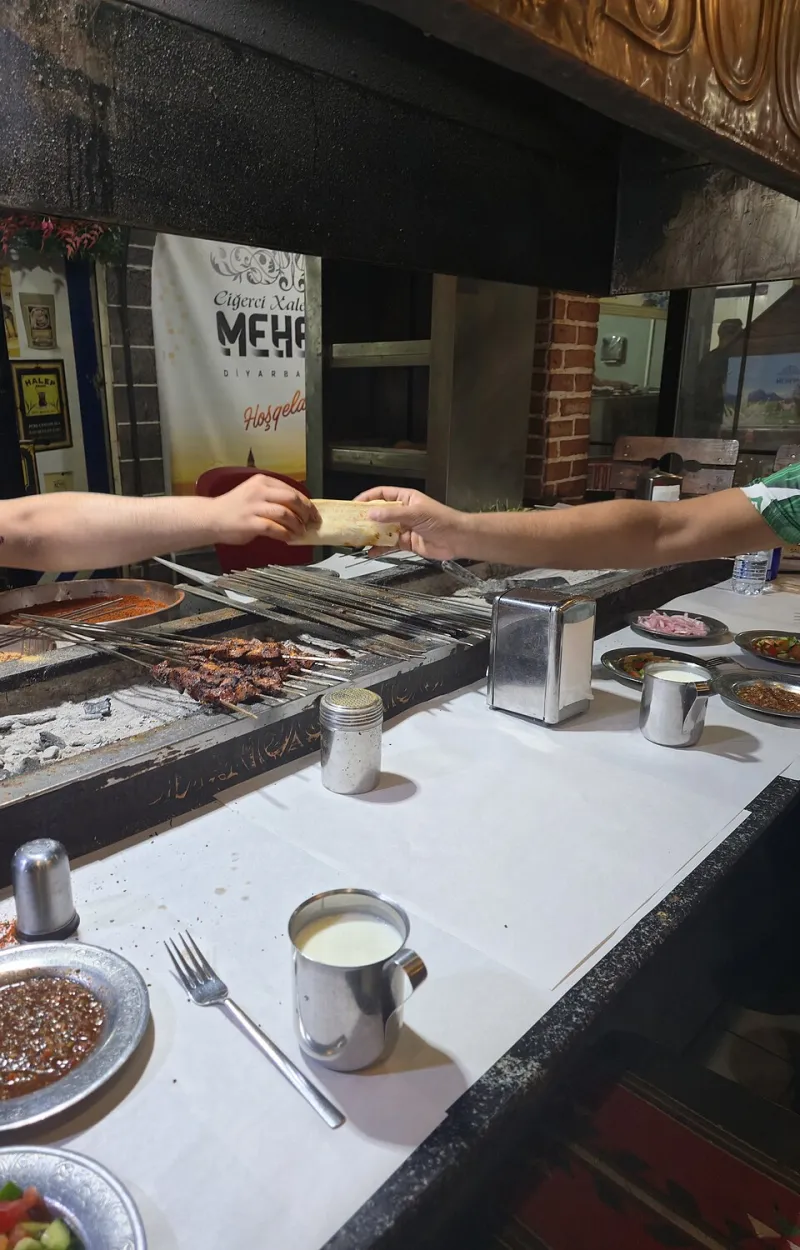
Photo: KediÇobanı, CC BY-SA 4.0, via Wikimedia Commons
Walk into the right Turkish restaurant in Britain and you hear dinner before you see it. There is the low roar of charcoal, the tick of skewers being turned, the occasional flare as fat hits the coals. Then you spot the ocakbaşı: the open grill at the heart of the room, usually with a cook working in full view. That setup is not just a bit of restaurant decoration. It is the best show on the high street, and it changes the way we order, share and behave at the table.
The grill as a stage
Ocakbaşı roughly means the hearth head, the place beside the fire. In the best UK Turkish restaurants, it is exactly that: a working hearth rather than a hidden kitchen. You can see skewers lined up, lamb chops trimmed, chicken thighs threaded, flatbreads warmed and maybe a tray of peppers softening at the edge of the coals. The cook is not performing for cameras. They are doing a job in public, which is a very different and much more convincing kind of theatre.
That visibility builds trust before the first plate lands. You can see how fresh the meat looks, how clean the worktop is, whether the fire is being managed or merely tolerated. You can watch the cook move between skewers with a rhythm that says they have done this thousands of times. In a country where so much restaurant food arrives through a swing door from a kitchen nobody sees, that is oddly reassuring.
What to look for before you order
A good ocakbaşı has a few quiet signals. The coals should glow red at the centre with grey ash at the edges, not sit under a wall of orange flame. The cook should be turning skewers often and moving them around the grill, not leaving them to char in one spot. The meat should look trimmed and organised, not piled in a messy heap. You should be able to smell fat rendering and peppers blistering, not acrid smoke from a fire that has been allowed to sulk.
Look at what is cooking first. Chicken thighs and lamb cubes usually need a little more time; liver and kidneys are quick. If the cook is sequencing properly, your table will receive things in sensible waves rather than one lukewarm avalanche. A good ocakbaşı also keeps the serving plates warm and the flatbread close to the fire. These are small things, but they separate a proper grill restaurant from a place that simply owns a charcoal sign.
Why visible cooking changes the meal
When you can see the fire, you eat more attentively. You notice the difference between lamb neck that has had time to soften and a cube of shoulder that has been rushed. You understand why the chicken thigh tastes juicier than the breast, and why a little char on the edge of a pepper is a good thing. The grill becomes a lesson in patience, even if nobody is calling it that.
It also makes sharing feel natural. Turkish grills are built for the middle of the table: skewers, chops, salads, bread, pickles, maybe a bowl of ezme or hummus. When the ocakbaşı is visible, the table becomes a running conversation with the fire. You order a few things, see what arrives, then add another skewer because the first one looked so good going on. That is a far more enjoyable way to eat than committing to a neat three-course plan.
In Britain we already understand the appeal of a carvery, a pizza oven or a sushi counter. The ocakbaşı belongs in that company. It gives a meal a focal point and a bit of movement. It also gives solo diners something to watch and groups something to argue about, usually in the friendliest way. Should we get more liver? Is the lamb chop worth it? The answer is usually yes, and the grill helps you decide.
The front row changes how you tip
A visible grill also changes the tipping conversation. You are not just paying for food that appeared from nowhere. You are paying for the cook's timing, the server's pacing and the whole small choreography of a room built around live fire. If the skewers are well cooked and the table has been looked after, it feels right to tip on the meal rather than just the cover. That is not a guilt trip; it is simply recognising the skill in front of you.
A good ocakbaşı cook can read a table. They know when to send bread, when to hold back the chops, when to add a little more char for someone who clearly wants it. That kind of judgement does not show up on a menu, but it is exactly what makes a restaurant worth returning to.
A habit worth keeping
Next time you book a Turkish grill, ask for a table near the ocakbaşı if you can. Not because the food tastes different, but because you will understand it better. Watch the fire, ask what is good today, order a little more than you planned and share it. In a British restaurant landscape full of careful concepts and hidden kitchens, there is something refreshing about a cook, a grill and a room that trusts you to enjoy the view.