The Pot Stays on the Table: Why Turkish Tea Is the Real Final Course
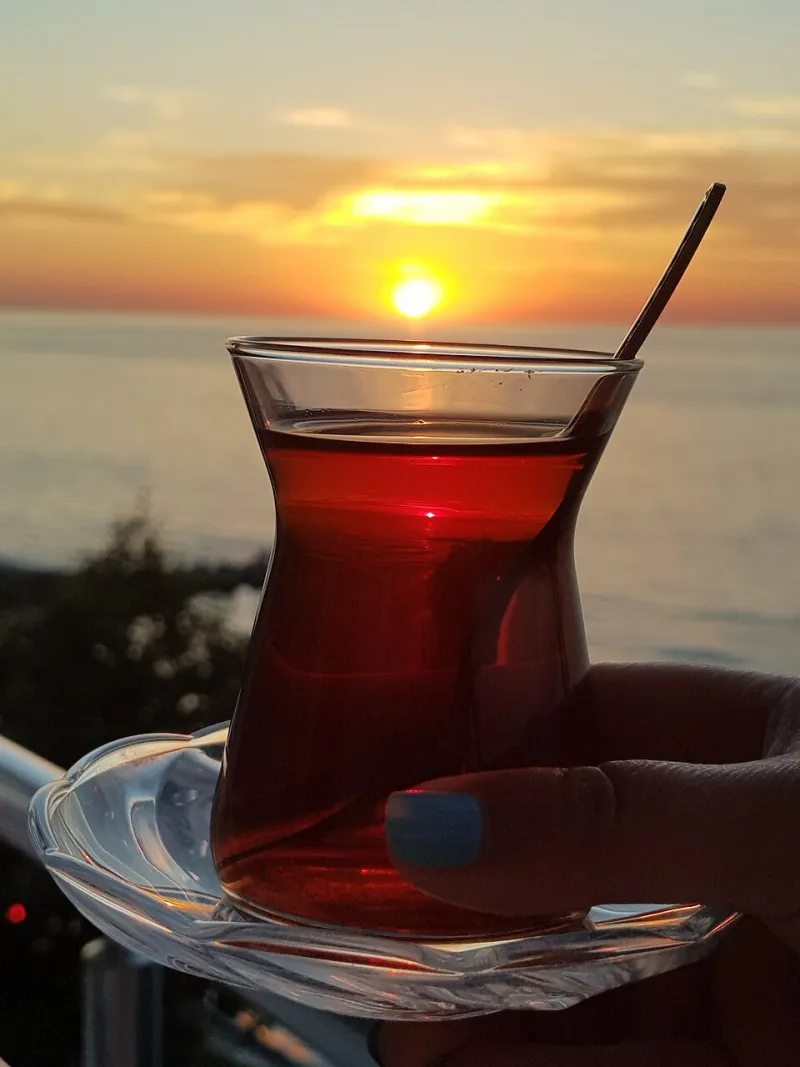
Photo: Sakhalinio, CC BY-SA 4.0, via Wikimedia Commons
There is a moment near the end of a good Turkish grill night when the plates are empty, the coals are losing their glow and someone reaches for the teapot rather than the dessert menu. It is not an refusal of sweetness. It is a change of pace. The meal has been smoky, salty and generous; what follows is small, warm and unhurried. In the UK, where pudding often acts as the curtain call, this can feel like a quiet revelation. The table does not empty. It settles.
Why the meal ends with a glass, not a plate
A heavy dessert after a mangal can be one course too many. Turkish tea, by contrast, works like a palate reset. The tannins cut through lamb fat and charcoal smoke; the warmth is comforting without being filling. It also gives hosts a reason to keep everyone seated for another twenty minutes, which is often the best part of the evening.
There is a social logic to it too. A slice of cake is a portion; a glass of tea is an invitation. You can pour one more, top it up, ask whether someone takes it strong or light, and pass the sugar. In Turkish homes and ocakbaşı restaurants, tea is not a formal finale. It is the background rhythm of conversation. That makes it particularly well suited to UK hosting, where the best dinners tend to be the ones nobody is rushing to end.
Brewing çay at home without turning it into a ceremony
You do not need a full Turkish tea set to do this properly, though a çaydanlık helps. The principle is simple: brew strong tea in a small top pot and keep hot water in the larger pot below. You then combine the two in the glass, adjusting strength to taste.
If you have a double teapot, fill the lower pot with fresh water and bring it to the boil. Put two heaped tablespoons of loose-leaf Turkish black tea into the top pot, add about 300ml just-boiled water, and set the top pot over the lower one. Let it steep over a low heat or steam for 10 to 15 minutes. The tea should be dark and aromatic, not stewed to bitterness.
No çaydanlık? Use a small teapot sitting over a saucepan of simmering water, or brew a concentrated batch in a teapot and keep hot water in a kettle nearby. UK tap water can be hard, so filtered water will give you a cleaner flavour if yours is particularly chalky. Avoid milk. Turkish tea is served black, in small tulip-shaped glasses, with sugar cubes on the side for anyone who wants them.
To serve, pour a little strong tea into the glass first, then top up with hot water. A common starting point is roughly one-third tea to two-thirds water, but strength is personal. Ask guests whether they want it strong, medium or light. That small question is part of the hospitality.
What to put beside it
This is not the moment for a full dessert table. A small plate or two is enough: cubes of lokum, a dish of plain or pistachio helva, dried figs, apricots or dates, and a handful of walnuts. In Turkish grills, sweetness often arrives in small, concentrated bites rather than large slices. Dried fruit works especially well after smoke and salt; it feels lighter than pastry and keeps the table grazing rather than groaning.
If you want a British shortcut, good dried fruit from a supermarket and a box of Turkish delight will do the job. A few squares of plain chocolate are not traditional, but they are not a crime either. The point is restraint. The tea is the course; the sweets are punctuation.
The host’s move
When the main plates come off the table, put the tea on. Clear the clutter, leave the glasses, and let the pot sit within reach. In winter, this is the moment the kitchen stops feeling like a production line and starts feeling like a room again. Guests can leave whenever they like, but they rarely do.
That is the quiet generosity of the Turkish tea finish. It does not demand a pudding. It does not need a timetable. It simply keeps the table alive a little longer, one small glass at a time.